Navigating Change, Regulations, And Stewardship Discussed
At the Amenity Forum's Conference
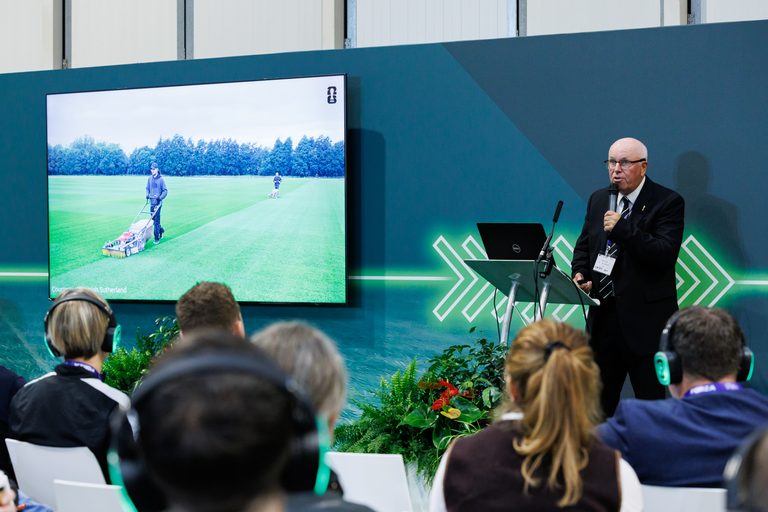
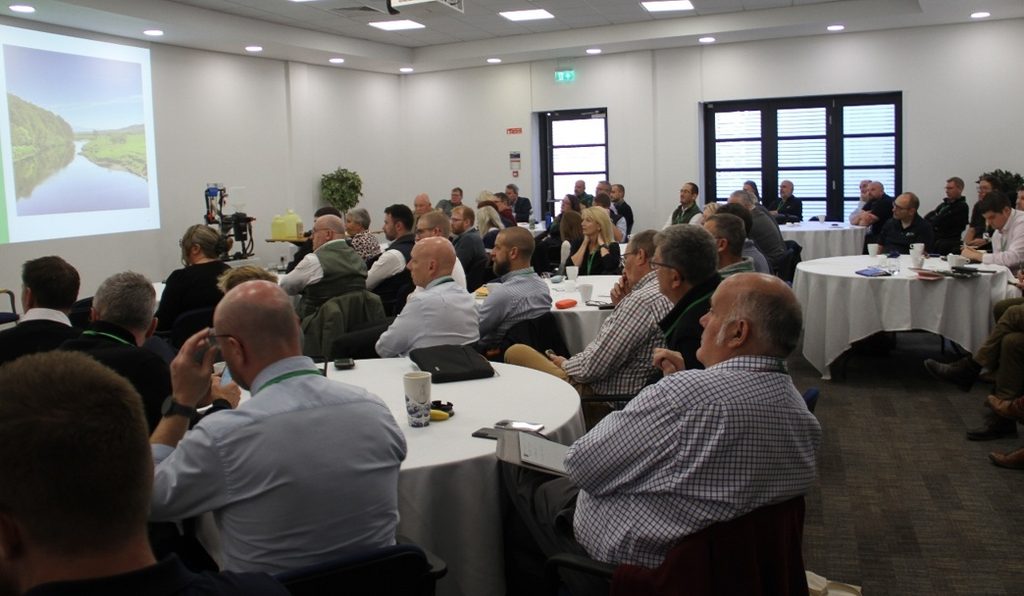
Last week I took the opportunity to attend the Amenity Forum’s Annual Conference held at the British Motor Museum, Gaydon in Warwickshire.
The museum offers a colourful insight into the British motor industry with many displays of cars that have been a vital part of the economy and the lives of people living in the Midlands. As part of the conference the delegates had a chance to see some of the cars on display.
This year’s theme was centred around policy, practice and resilience with three core straplines to consider; Navigating Change, Regulations; Stewardship and the Future of Amenity Management.

The day was broken down to three sessions with the first session, covering policy, regulation, and practice affecting amenity, including pesticide policy and the changing regulatory landscape from the industry perspective, HSE/CRD inspection and sharing practice, and the Environment Agency’s perspective on risk and sustainable vegetation management
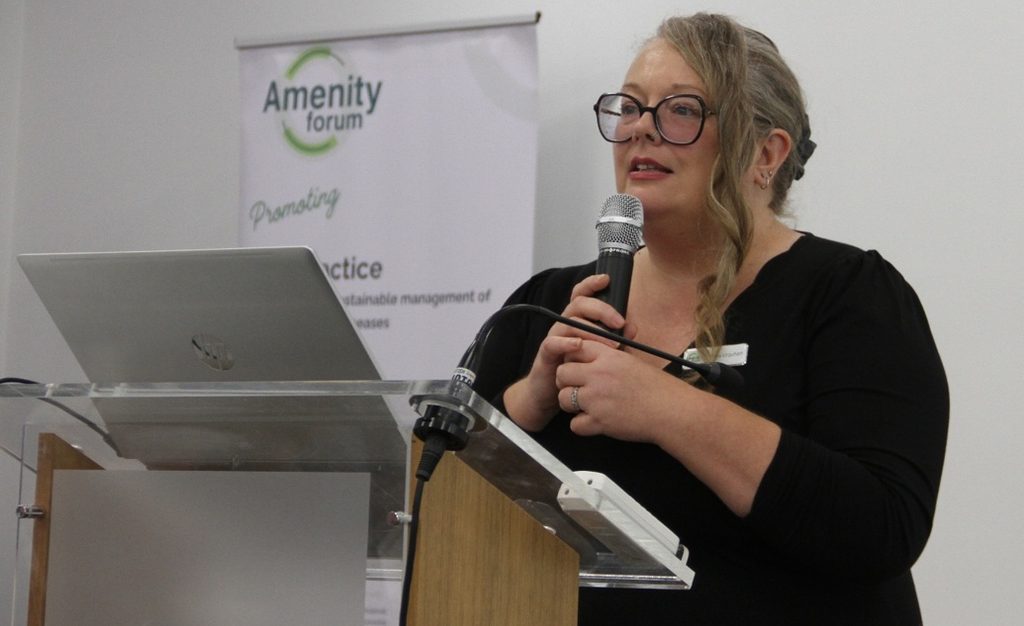
Corrina Urquhart
After a warm welcome by the Forum’s chairman, Ian Graham, Corrina Urquhart gave us an update on their new initiatives and ideas for future engagement with current partners and businesses.
The first speaker was Mark Buckingham, Bayer Crop Science, who spoke about the changing regulatory landscape and examining the direction of pesticide policy we are facing.
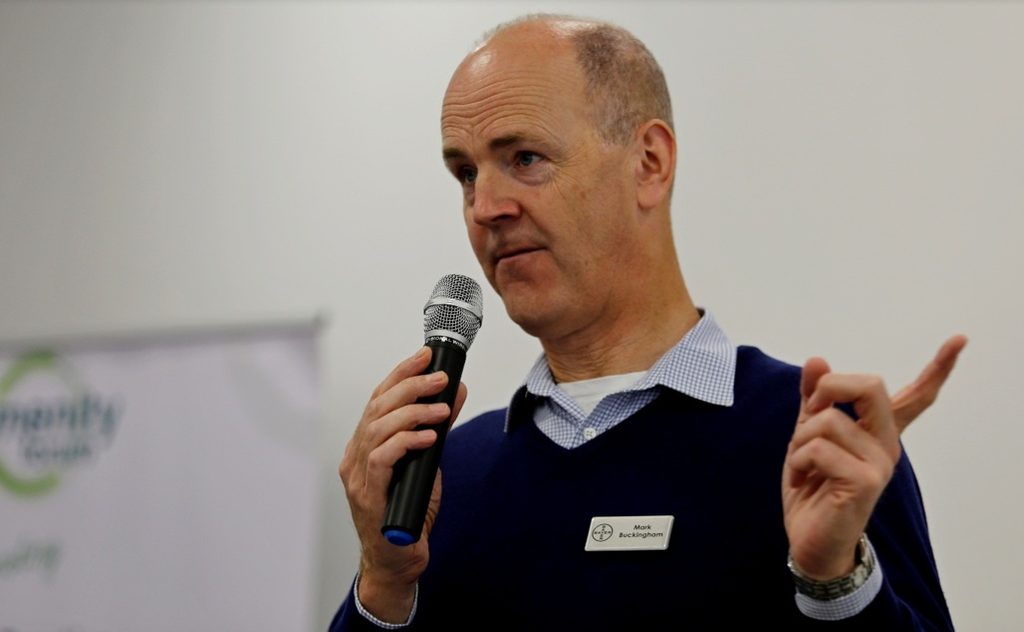
Mark Buckingham, Bayer
Stating the facts that the UK moved from an EU membership to regulatory independence after 2021, he explained how we then moved towards a “dynamic alignment” following the EU reset announced in May 2025. Industry has asked for a transition period, but its final inclusion and terms are not confirmed; the timing and practical implementation process for bringing EU authorisations into force in Great Britain are still undecided, and the scope of any limited exemptions is also unclear.
The proposed arrangement may give the UK decision-shaping access to European regulatory committee meetings without voting rights; exemptions and implementation details remain unresolved.
As for Glyphosate Renewal, The Glyphosate Renewal Group has submitted its Great Britain renewal dossier, based on the European dossier and supplemented with updated science; the current GB authorisation expires on 15 December 2026, with an extension expected so the process can finish.
CRD is expected to publish a draft renewal assessment/report; a 60-day public consultation is expected; regulators will review responses and complete the final renewal assessment / report; and the responsible minister is expected to make the renewal decision the following year.

Al Mason
Session two began with Al Mason from Languard, who spoke of his concerns relating to the bad press of Glyphosate and then went on to talk about its efficiency and effectiveness. He spoke about the need to accurately identify the ideal timing of spraying and method of using glyphosate. Often one annual spray will not provide full control of perennial weeds, but it can address major weeds when combined with more frequent sweeping.
Two-spray programs are common because of budget limits, while three-spray programs allow better timing around spring and autumn germination peaks.
Client-mandated August starts can reduce effectiveness, increase resource pressure, and allow weeds to emerge after rainfall. Proving year-on-year glyphosate reduction may also be difficult because wetter conditions create greater weed pressure.
HSE/ CRD staff
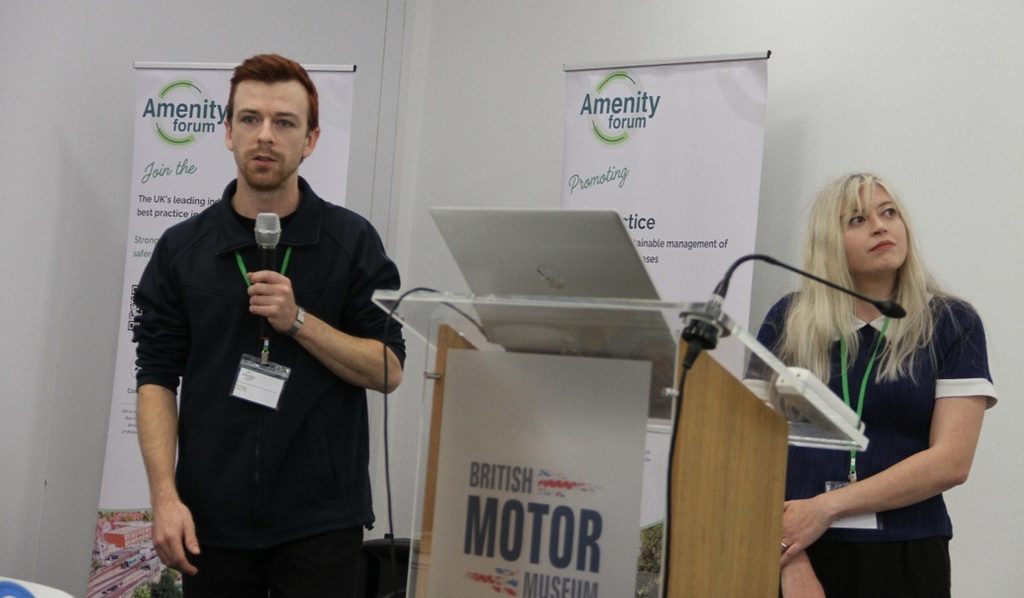
We then had staff from HSE/CRD give an insight into the inspection processes they carry out to validate companies are working efficiently and complying to pesticides regulations. They gave some examples of non-compliance activities, such as allowing chemicals to not be stored correctly and housed in inappropriate storage containers / shelving. Along with out-of-date labels and products still being stored.
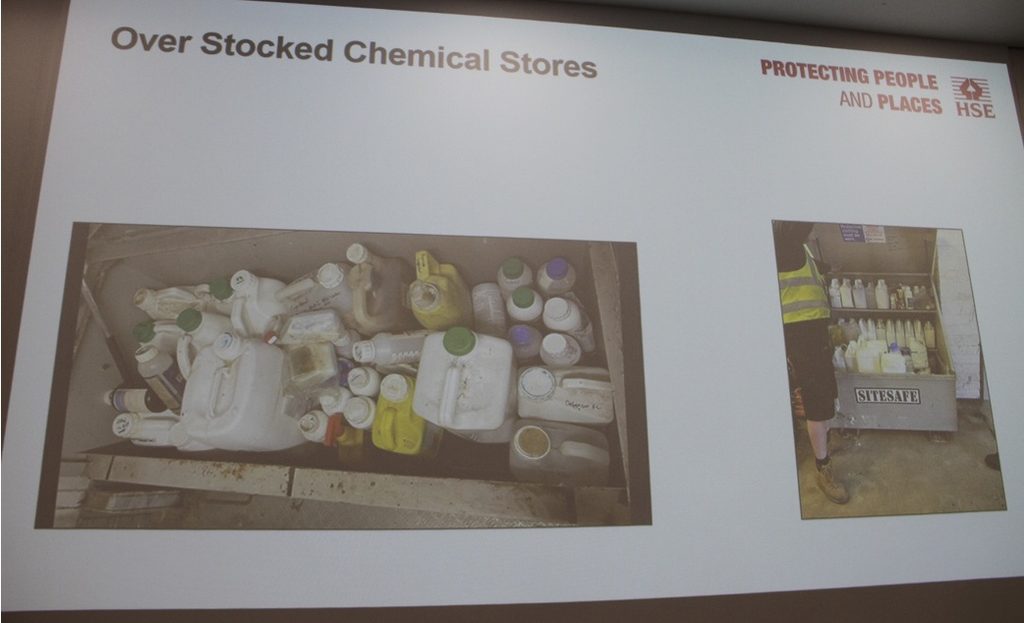
A presentation by Jonathan Newman from the Environment Agency followed, who spoke about the importance of protecting water environments rivers and lakes and ponds. He talked about the integrated methods we should be adopting to meet legislation and reduce the risk of water pollutions.
After Jonathan, was Lewis Blois (ICL) who gave a talk and thoughts on how amenity management must respond to rising expectations, scrutiny, regulation, labour shortages, and climate volatility by building resilience through coordinated practices.

Lewis Blois, ICL
Lewis said expectations have risen across sectors, while organisations are asked to deliver higher standards with less water, fewer pesticides, and smaller budgets.
He also spoke on recruiting and retaining skilled workers is becoming harder, and replacing accumulated experience takes time.
Climate volatility is producing extended drought and heat, as well as intense rainfall, rather than simply higher average temperatures.
Resilience responses would be to steward products responsibly to protect current and future options, including glyphosate and other active ingredients.
Integrate multiple approaches through integrated weed, pest, turf, and other management programs instead of relying on single solutions.
Use technology such as moisture probes, apps, precision irrigation, controlled-release fertilizers, and surfactants to mitigate stress and risk. And above all, improve on collaboratively working across industry sectors.
Lewis was also keen to mention the Amenity Spray Operator of the Year competition that is co-sponsored by Syngenta and ICL. The award recognises good practice, stewardship, competence, and proper product application. The two finalists are Peter Harford from Carlton House Golf Club and Euan Paulson from Royal Aberdeen Golf Club – with the winner being announced at BTME in Harrogate in January.
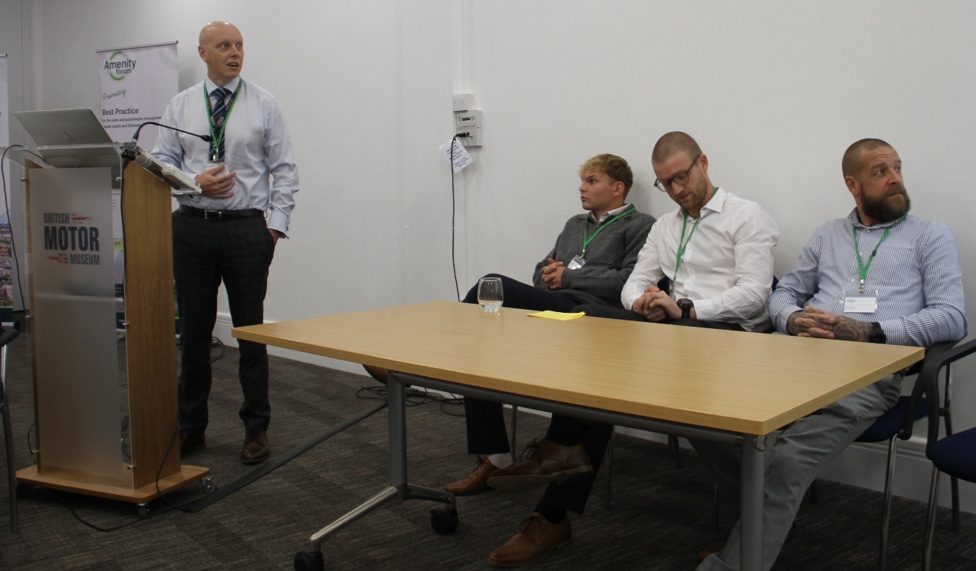
GB Railfreight staff
Four members of staff from GB Railfreight gave a presentation on its rail vegetation-management operations, fleet, maintenance model, chemical logistics, and delivery challenges across the UK network.

GB Railfreight operates 180 locomotives, employs more than 1,400 staff, moves 22% of Britain’s rail freight, reports approximately 99% reliability, and operates across 20 sites.
Its weed-spraying involvement began with support for smart weed-spray train trials in 2019; the first successful trial ran in 2021, and all three trains operated in 2022.
In 2025, GB Railfreight won the Network Rail MPV North contract, spanning Penzance to Wick, alongside the smart weed-spray trains.
The smart weed-spray trains treated more than 15,000 rail miles and used over 45,000 liters of herbicide during the 2026 season.
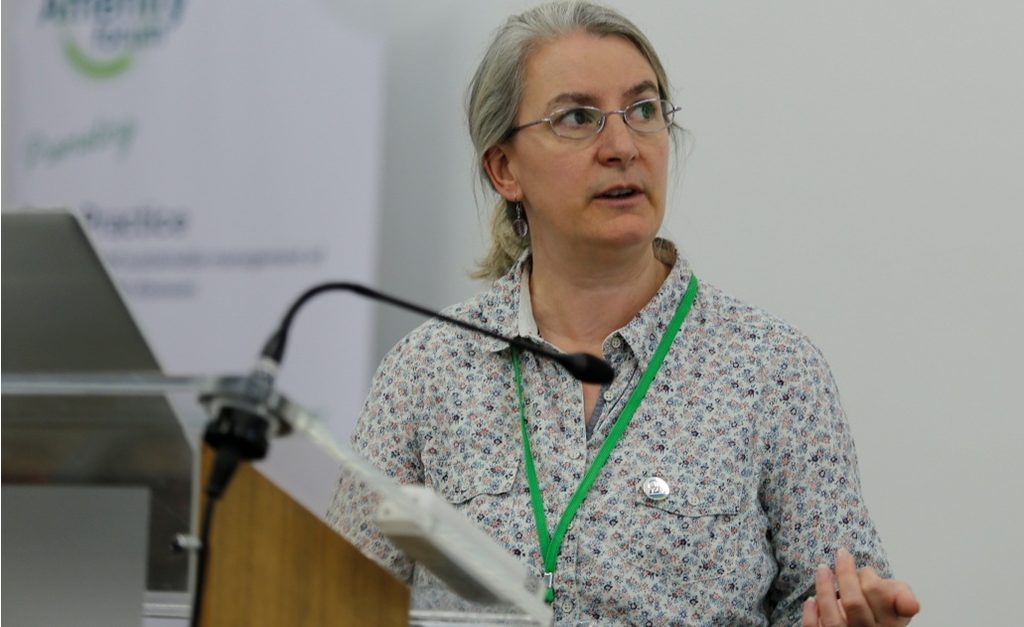
Lyn Tatnall, WRAG
This session was completed with an interesting presentation by Dr Lynn Tatnall, Weed Resistance Action Group (WRAG), where she spoke about that for glyphosate globally, resistance has been reported in 62 weed species. In 2025, the UK recorded its first Italian ryegrass resistance case, with three isolated populations being monitored in collaboration with Bayer.
Amenity situations face high risk because herbicide options are limited and repeated applications can select resistant survivors. Avoid repeatedly spraying surviving plants with glyphosate. Record, map, test, and report suspected resistance rather than continuing ineffective applications.
Canadian fleabane, also known as Erigeron canadensis, was highlighted as a widespread, high-seed-producing annual that can thrive in pavement cracks, gutters, and debris. Its shallow roots make early pulling, brushing, or removal practical.
Alternatives methods of control include foam, electrical, and steam weeding, alongside sweeping, improved space design, reduced detritus, and planting choices that limit leaf buildup.
A new four-page leaflet produced through collaboration between the Weed Resistance Action Group and the Amenity Forum was released for PDF download, with paper copies available.

Dr Alex Vickers
Following lunch, the last session began with a talk by Dr Alex Vickers on the management of soils and being able to identify its characteristics and how to manage it in an amenity and sports turf environment.
This was followed by an interesting presentation by Tom Young about water resilience. This year’s hot and dry weather has brought to the fore many issues regarding water supplies and storage.

Tom Young
Tom described warmer UK temperatures, drier summers, wetter winters, and longer drought periods, creating a mismatch between water availability and demand.
Traditional sources such as boreholes, river abstractions, and mains water are expected to become less available or more restricted.
International Lessons
Spain commonly uses treated sewage effluent for golf and agricultural irrigation and mixes multiple water sources.
Israel treats water infrastructure as a national-security issue, combining treated wastewater, rainwater capture, public education, and advanced irrigation.
California uses managed aquifer recharge, including deliberate flooding of farmland; the Canary Islands use fog harvesting and reforestation; Singapore captures, treats, and reuses nearly all island water.
UK examples include the Felixstowe Hydrocycle, Chorley Golf Club’s drainage-ditch storage, The London Club’s site-wide harvesting system, horizontal boreholes at Formby Ladies Golf Club, and reuse of high-flow water near Ipswich.

Richard Garnet, Wisdom Systems
UK climate projections indicate warmer conditions, altered precipitation patterns, and longer summer droughts. Golf and other sport and amenity facilities must start preparing and finding ways to be more drought resilient.
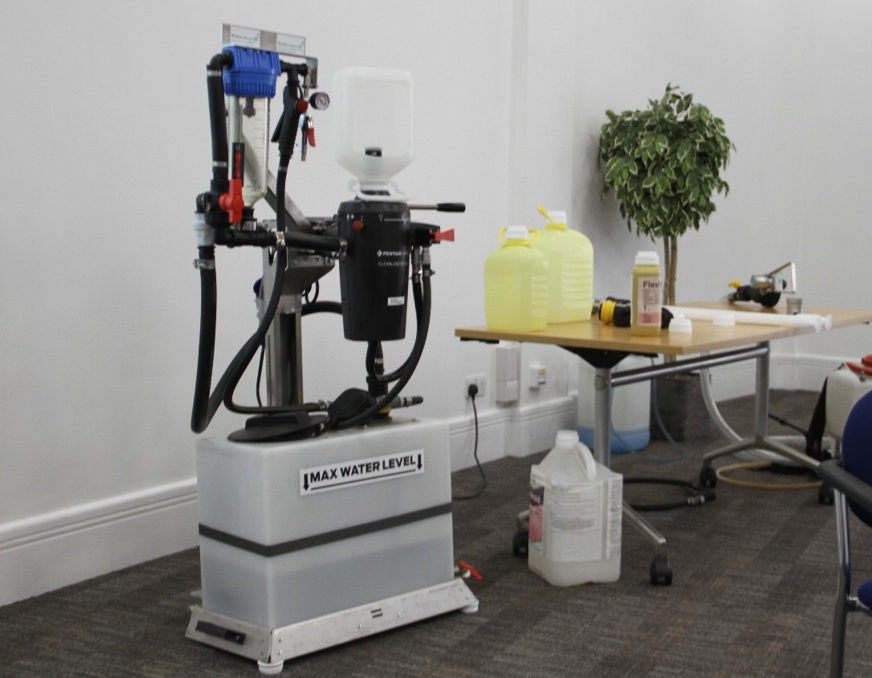
Closed transfer system
And finally, the last presentation was by Richard Garnet from Wisdom Systems who spoke about Closed Transfer Systems (CTS) that are a safer, faster, and more sustainable way to fill agricultural and amenity sprayers.
Open chemical handling creates most exposure and surface-water contamination risks, while professional closed transfer systems were described as 98% less contaminating.
The small-bottle system supports pesticide containers up to 20 liters and uses an Easyconnect closure adopted by multiple chemical companies; approximately 40% of bottles currently have compatible caps.
Larger 300-, 600-, and 1,000-liter containers use sealed valves, digital flow meters, and returnable refill systems. Transfer performance is up to 35 liters per minute with nearly zero contamination and flow-meter accuracy of 0.5% across 20 viscosity levels.
Residue has been reduced from 15–20 liters to approximately 100–200 milliliters. Faster filling can enable one or two additional sprayer loads per day.
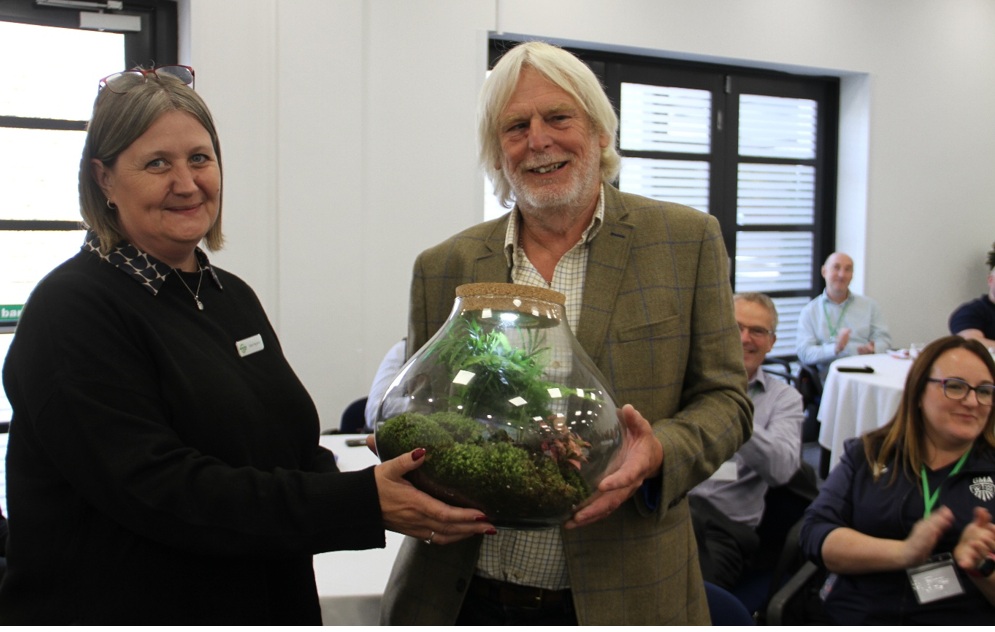
Will Kay presentation
These systems are used in agriculture, banana plantations, amenity settings, golf courses, and other turf applications. A prototype closed dosing system for knapsack sprayers attaches through a dry-break connection and dispenses 20–80 milliliters per operation from a refillable container.
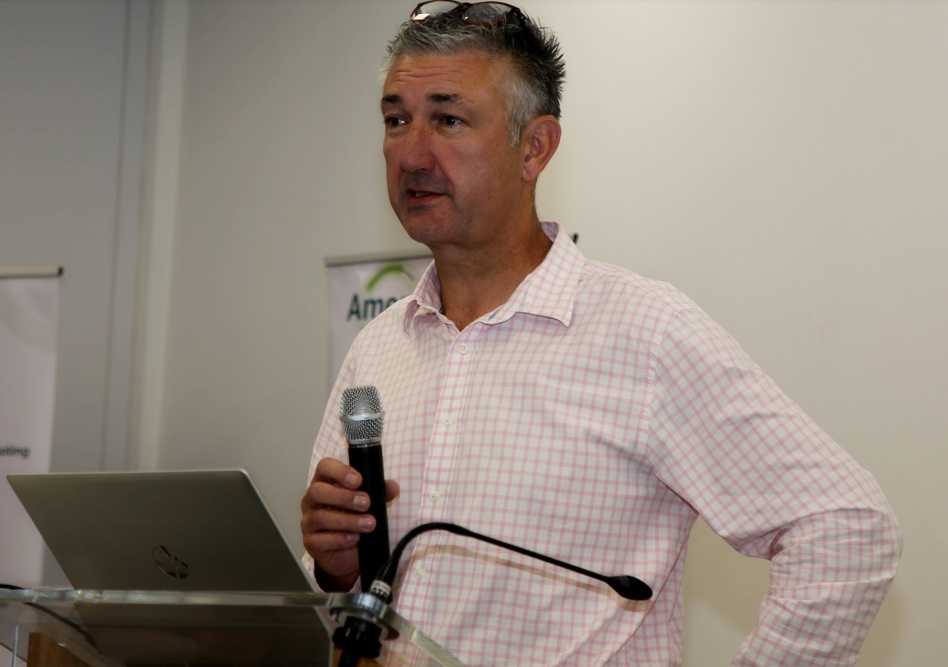
Ian Graham, Chairman of the Amenity Forum
During the conference the Amenity Forum took the opportunity to recognise the four decades of service by Will Kay and present him with a Thank You gift for his devotion and contributions focused on raising professional standards, supporting evidence-led approaches, representing contractors, and strengthening the sector’s voice during his time working for Languard. The final act of the day was concluded with a summing up of the presentations, thanking the sponsors of the conference and wishing everybody a safe journey home.
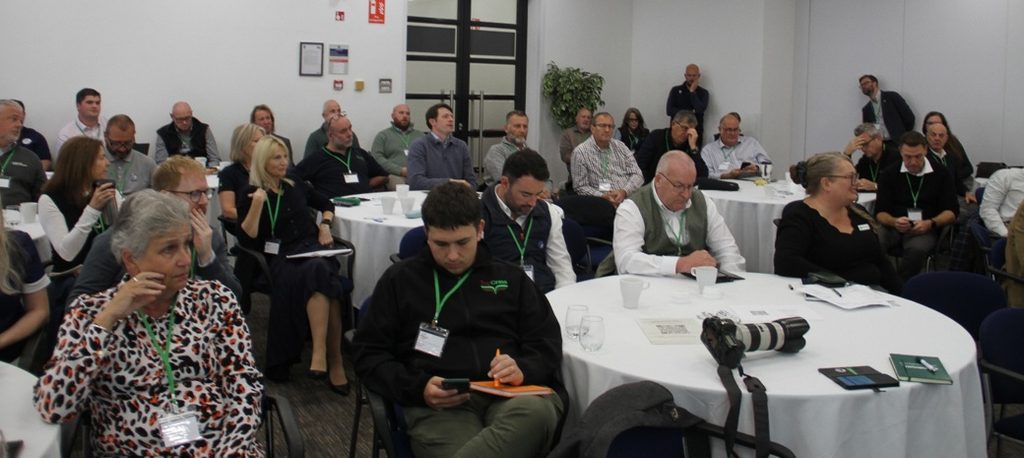
For myself and the 70 plus delegates and sponsors who attended the conference I believe we all had a very informative day. However, for me personally I think we need to find a way to attract more new delegates to the conference in the coming years.