How to resolve AdBlock issue?
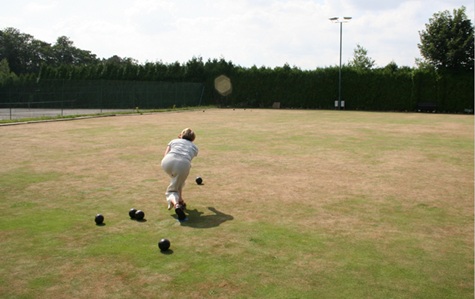
TurfPro editor, Laurence Gale, writes . . .
I think it goes without saying that we are currently heading for one of the dryest summers on record. Having read Mark Hunt’s recent weather blog July 13th, 2026 he clearly outlines the sheer heat stresses we are currently experiencing.
He wrote, “Well, another bruising week in turf management with some of our Davis weather stations reporting > 67mm of Evapotranspiration (E.T) since the start of July, that's just 12 days and averages out at 5.58mm per day.
"In fact, we have seen the highest frequency of 6mm+ ET days that we have ever recorded from our default Thame location in the U.K, with 6 out of the first 12 days of July exceeding 6mm+ moisture loss. Quite incredible.”
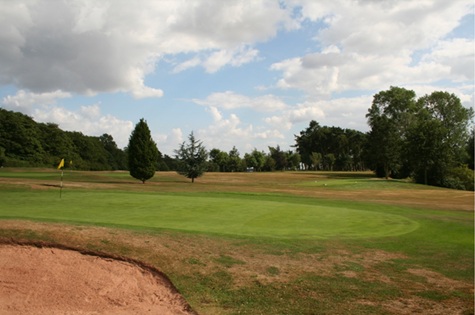
I also read on the BBC weather website a helpful piece entitled Is there a hosepipe ban in my area and what does it mean?. In it, it says more than eight million households are now living under hosepipe bans, as the UK battles its third heatwave of 2026.
This comes amid a record-breaking spring and summer, March, April and May - the three months which make up meteorological spring - ranked within the UK's top 10 warmest since records began in 1884.
What is a hosepipe ban?
A hosepipe ban, also known as a Temporary Use Ban, is a restriction on using hosepipes. They are imposed by water companies to try and save water during periods of high demand or low supply.
People living in areas where there is a ban are not allowed to use one to:
This is to ensure enough water is saved for drinking, those who are vulnerable and for essential use. Anyone breaking these rules could be fined up to £1,000.
However, there may some exemptions for some sports clubs, but you would need to check with your local water authority.
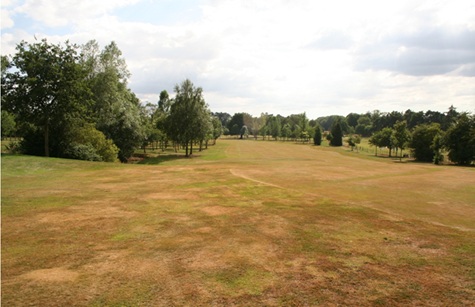
For grassroots sports clubs in the UK, whether you can use a hosepipe during a Temporary Use Ban depends on your water company's specific restrictions and exemptions, not simply on being a grassroots club.
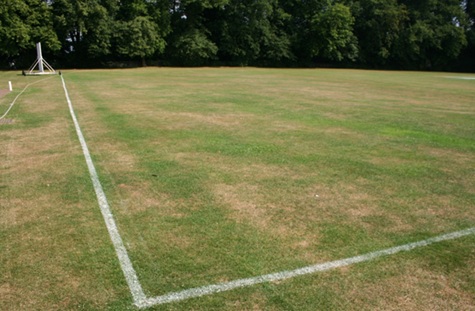
However, this summer many water companies do allow limited watering of sports pitches where it is necessary for health and safety - for example for watering the active playing area (such as a cricket square or football/rugby playing surface) to prevent dangerous conditions may be permitted.
The exemption does not usually extend to the entire grounds, ornamental grass, or general landscape watering.
Some companies also require watering to take place outside peak demand hours.
Who is exempt from a hosepipe ban?
There are quite a few exemptions to hosepipe bans, with exact details available on each water company's website.
They generally include:
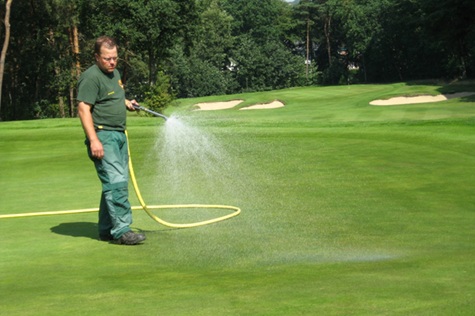
For those not impacted by water bans, do try to use water sparingly.
During prolonged hot, dry spells, the aim is not to keep the grass looking lush at all costs. The priority is maintaining a safe, healthy playing surface while using water as efficiently as possible.
Apply enough water to soak the rootzone (typically 20–25 mm in one application). Deep watering encourages roots to grow down, making the turf more drought tolerant.
Avoid frequent light sprinkling, which encourages shallow rooting.
Water at the right time
The best time is early morning (around 4–8 am) when evaporation is lowest and wind speeds are usually lighter. If morning watering isn’t possible, late evening is the next best option, although prolonged leaf wetness overnight can increase disease risk on fine turf.
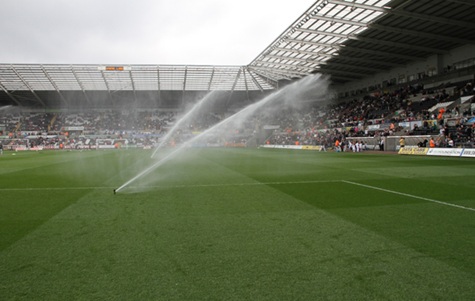
Avoid watering during the middle of the day, unless it's an emergency to cool a surface before play. If water is limited, concentrate on specific areas, such as cricket squares and bowling ends, football and rugby goalmouths and centre circles, rugby scrummage areas, tennis baselines and high-wear training areas. It's better to keep critical areas safe than spread water thinly across the whole site.
During this period of hot weather raise the mowing height. Raise the cut by 5–10 mm where your sport allows. Longer grass shades the soil, reduces evaporation and protects the crown of the plant. Avoid scalping stressed turf.
Check soil moisture, not just grass colour. Brown grass isn't always dead. Many UK turf species go into summer dormancy and recover once cooler, wetter weather returns. A screwdriver or soil probe pushed 75–100 mm into the soil is a simple way to assess whether moisture has reached the rootzone.
If you're under a hosepipe ban check your water company's rules carefully. Several UK water companies allow limited watering of active sports playing areas where necessary for player safety, but this is not a universal exemption and often excludes watering ornamental or non-playing areas. Always confirm the local restrictions before irrigating.
There is currently no sign of any widespread, sustained rainfall across the UK over the next couple of weeks. While there are some opportunities for showers and thunderstorms, they're expected to be hit-and-miss rather than the prolonged rain that's needed to ease the dry conditions.
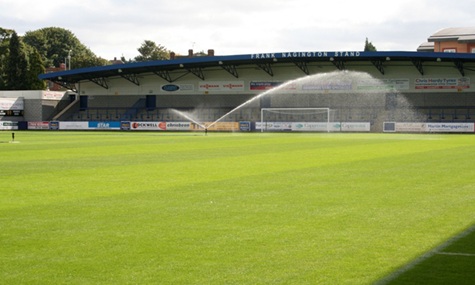
The current outlook for this week (w/c 20th July 2026) is that high pressure is expected to remain influential. There is a slightly greater chance of showers, rain or thunderstorms later in the period, but confidence in widespread rainfall is low.
Late July into early August: Forecast confidence decreases, but there are stronger indications of a more changeable pattern developing, bringing an increased chance of longer spells of rain mixed with drier periods.
For sports grounds, that's not especially encouraging. Thunderstorms can produce very heavy rain over a small area while nearby locations receive nothing at all, and much of that water runs off hard, baked ground instead of soaking into the soil. What pitches really need is
Editorial Address:
LandPower Publications LLP, Howbery Park, Benson Lane, Wallingford, Oxfordshire, OX10 8BA
Telephone:
Steve Gibbs: +44 (0)7929 438213