How to resolve AdBlock issue?

To kick off 2026, TurfPro has asked a series of prominent figures to offer their thoughts on the industry's current State Of Play.
Ian Smith is a seasoned turf and grounds management professional based in St Albans, England, with extensive experience in sports turfcare and pitch preparation. He serves as the amenity & sports turf consultant / head groundsman at St Albans School’s Woollam Trust Playing Fields, where he oversees the presentation, performance, and maintenance of a broad range of playing surfaces used for cricket, rugby, football, and hockey.
Ian began his career in turfcare after working at Watford FC, gaining practical experience with high-standards pitch maintenance in a professional football environment. He later returned to his hometown area and took a role with St Albans School, applying his expertise to school and community sports facilities.
At St Albans School, Ian is responsible for leading a professional groundstaff operation that maintains some of the UK’s most respected playing surfaces at the Woollam Trust Playing Fields. The complex includes 22 winter pitches for rugby and football, an all-weather hockey pitch, and multiple cricket squares. His work supports both competitive school sport and external club use, ensuring surfaces meet high standards of safety, playability, and visual presentation year-round.
Q1. What has been the product, machine or innovation that has helped you most in your career?
The understanding of sand particle size and shape of particles has transformed football pitches and outfields. Looking back pitches were bare through the middle. The sand used was soft sand in goal mouths and sharp sand over the rest of the pitch, bought from the builders merchant. The soft sand would lock together and stop water from getting through, whilst the sharp sand would take your skin off if you did a sliding tackle. Now sand is blended for optimum water control.
At the same time as this, modern rye grasses started to develop which were so much stronger and more resilient to wear with a finer leaf and stronger root system than before - hence you very rarely see a bare pitch these days.
Q2. What are the most challenging issues facing the industry?
The most challenging issue we are going to have to deal with is the extremes in weather. Without automatic irrigation many areas now drought off, meaning a lot of renovation work is lost. Winters are milder and wetter leading to surface ponding and cancellations - also disease issues at a time when chemical use is being reduced. Even with these wetter winters, drought restrictions will be become more common
Q3. What are your thoughts on our current trade show scene?
Trade shows now are good but people are now starting to pick and choose which one to go to. I think that suppliers will also pick one or two that they will attend rather than all three meaning we may well loose one show over the next few years.
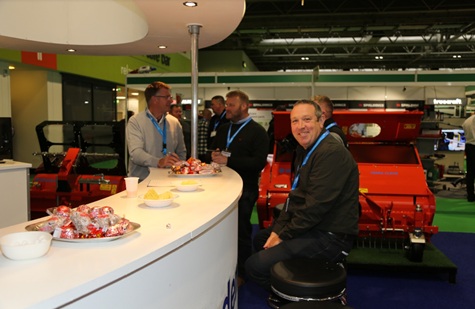
Personally, I like the combination of the indoor trade stands and seminars and outdoors trade stands and demo areas at GroundsFest. Plus accommodation is much cheaper in the Stoneleigh area compared to if you are staying over at the NEC or Harrogate.
Q4. What would you like to see in terms of collaboration across industry organisations?
I like the GMA working with the Sport England, ECB, FA, RFU, RFL and horse racing with their pitch improvement schemes. I think BIGGA are in a strong place to oversee the requirements for golf. Therefore I don't think that they will gain much by working with the GMA. Yes, there is some crossover as we all grow grass and use similar equipment and chemicals, but I think sport specific bodies are better.
Q5. What changes would you like to see made to improve the industry?
I would Like to see newer, younger staff joining our profession with so many of us old un's coming up to retirement age. I think that groundstaff sizes will shrink dramatically in the next few years, similar to how farming staff have. Nowadays farms of thousands of acres are run by two or three rather than tens of farm labourers. A lot of the tasks we do will be done by robots. We have already seen this in the last few years with cutting, marking and spraying. As technologies improve this will only keep expanding.
Editorial Address:
LandPower Publications LLP, Howbery Park, Benson Lane, Wallingford, Oxfordshire, OX10 8BA
Telephone:
Steve Gibbs: +44 (0)7929 438213